
In the mountains of Yunnan, there are places where tea is not simply grown. It is kept.
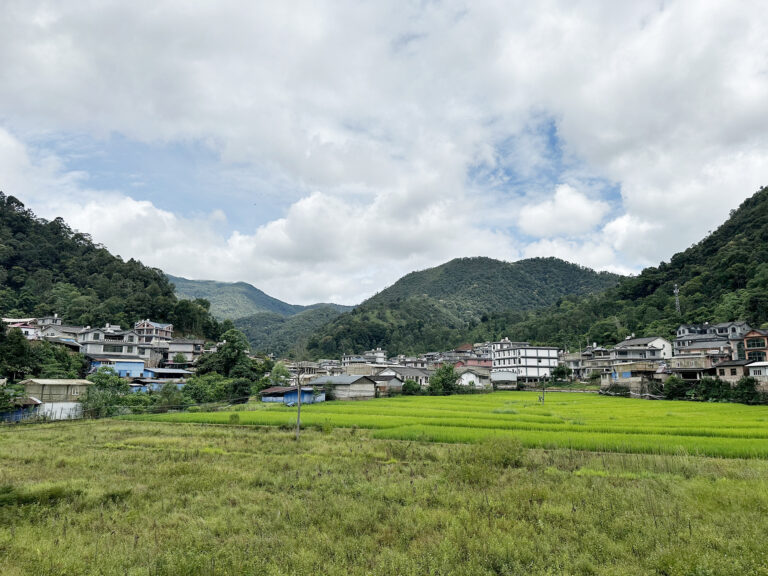
Zhanglang is one of them.
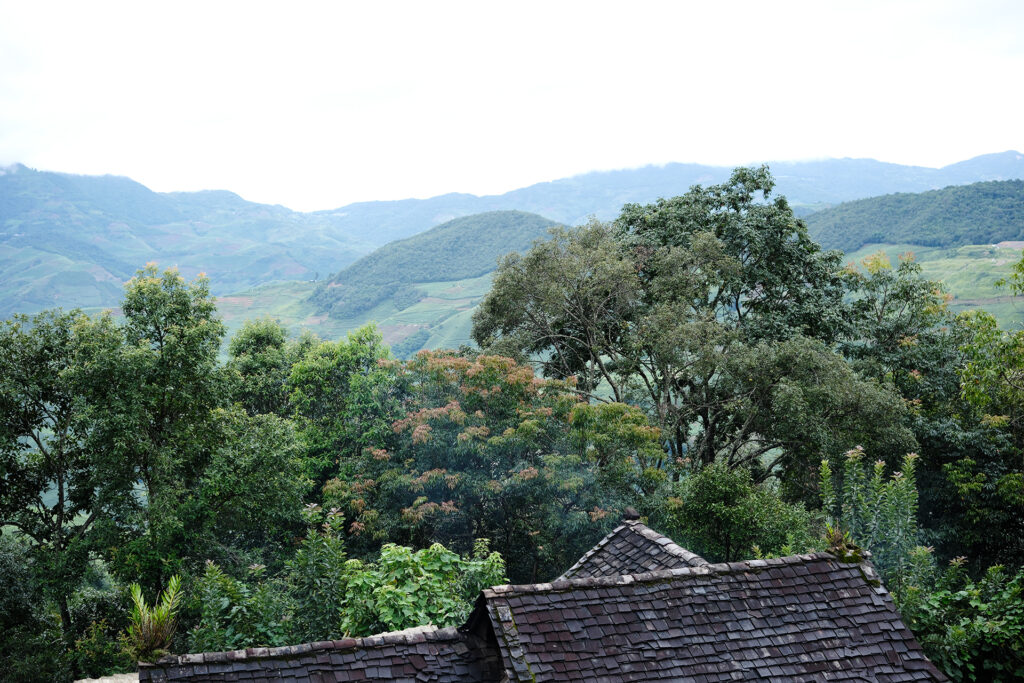
The Bulang people who live here have been tending tea for generations. Not as a crop that is renewed every few years, but as trees that stay in the forest, some of them very old. The signs in the village speak of more than 8,000 ancient tea trees scattered across the surrounding forests, and of roughly 9,000 mu of old tea gardens belonging to the village. Much of this grows in the Bada Mountains, where the forest is dense and the mist stays low.
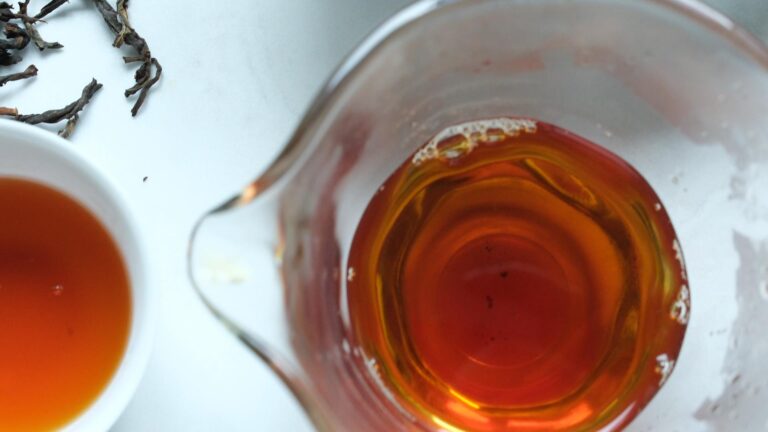
The Bulang distinguish between wild ancient trees and those that have been cultivated over time. The wild ones stand further out, hidden among other trees. Their leaves are described as oval, with a raised surface, soft in the hand, dark green, and often with a pointed tip. When the leaves are dry, the aroma is strong and wild. In the cup, the liquor is golden and bright, with a sweetness that sits alongside a clear bitterness, and a fragrance that moves between orchid, honey and wild flowers. The tea is said to have a strong, pure presence.
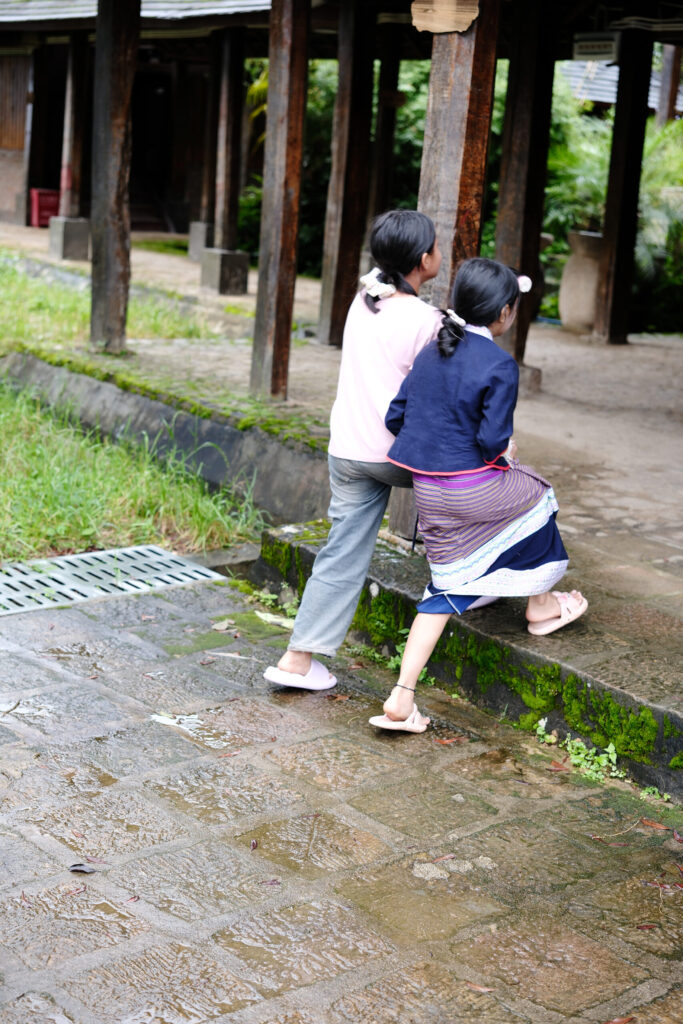
This is not a place that treats tea as something separate from daily life. The same people who look after the trees have kept their own language, their clothing, their music, and their knowledge of the forest. The signs note that these traditions have allowed them to “think for thousands of years and see thousands of miles away.” Whether one takes that literally or not, the continuity is real. The trees are still there, and the people who know them are still there.
The name Zhanglang itself comes from a story. In the Dai language it means “the place where the elephant was frozen.” According to the legend, a monk named Mahahong arrived here more than 1,400 years ago on an elephant while spreading Buddhist teachings. The elephant, unaccustomed to the cold, eventually froze. The villagers lit fires around it to warm it. Later, two nearby settlements moved together and named the new village Zhanglang, in memory of the elephant and the teaching it had helped to carry. The same story is tied to the old temple that still stands in the village, a complex built in the Bulang architectural style, once home to more than a hundred volumes of palm-leaf manuscripts.
We work with several teas from Zhanglang. One is already listed; another, a Shou Pu, will follow. They come from trees that have stood in this forest for a long time, looked after by people who have lived with them for just as long. The character of the tea reflects that: not bright and fleeting, but steady, with depth that opens slowly.
If you drink tea from Zhanglang, you are drinking something that has been kept rather than simply produced. The forest is still there. The trees are still there. And the people who know them are still there.
Zhanglang Bái Chá (White Tea) | Premium Yunnan White Tea
Zhanglang Shóu Pu-erh – will come soon
Chat with us